

Suggested Packing List for FREC 3
Posted by DS Medical on 4th Mar 2026
A well-prepared FREC 3 response kit should be organised to support the structured cABCDE patient assessment, allowing responders to access essential equipment quickly and logically during an emergency. By grouping equipment according to clinical priorities—Catastrophic Haemorrhage, Airway, Breathing, Circulation, Disability, and Exposure—responders can move through patient care in the same order that equipment is packed. This approach reduces delays in treatment, helps maintain situational awareness, and ensures critical interventions such as haemorrhage control and airway management can be delivered without unnecessary searching through the bag.
A typical FREC 3 kit packing list includes core equipment such as tourniquets, haemostatic dressings, trauma bandages, airway adjuncts (OPA and NPA), a bag-valve-mask, chest seals, pulse oximetry, dressings and bandages for circulation management, and immobilisation tools like cervical collars and splints. Environmental protection and PPE—such as thermal blankets, burn dressings, and gloves—are also essential to support patient safety and infection control. Regular stock checks and expiry-date monitoring ensures the kit remains operationally ready, with consumables replaced after use and full equipment checks carried out periodically.
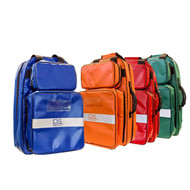
DS Medical ERB Mark II – FREC 3 cABCDE Layout (Enhanced)
This remains a suggested layout only to support logical treatment flow.
Always follow local/organisational protocols for final layout and access priorities.
The DS Medical ERB Mark II includes a modular internal system and oxygen retention straps, and typically comes with:
Standard Supplied Pouches
| Qty | Colour | Size | Suggested Use |
| 2 | Orange | 17x25x6cm | Catastrophic Haemorrhage |
| 2 | Yellow | 23.5x11.5x6cm | Airway |
| 2 | Blue | 23.5x11.5x6cm | Breathing |
| 2 | Green | 12x12x6cm | Disability / small assessment tools |
Additional Optional Pouches Available
| Blue/ Red / Yellow | 36x19.5x6.5cm | Larger module kits (e.g., advanced airway, trauma bulk dressings, oxygen delivery sets, burns kit, or extended circulation supplies) |
Suggested cABCDE Packing Using the Pouch System
Catastrophic Haemorrhage
Primary: Orange pouches
Optional Expansion: Large Red pouch (36 × 19.5 × 6.5)
Contents
• Tourniquets
• Haemostatic gauze
• Trauma/Israeli dressings
• Blast dressings
• Trauma shears
• TQ time marker
Airway
Primary: Yellow pouches
Optional Expansion: Large Yellow pouch
Contents
• OPA set
• NPA set + lubricant
• BVM
• Pocket mask
• Suction device
Breathing
Primary: Blue pouches
Optional Expansion: Large Blue pouch
Contents
• Chest seals
• Occlusive dressings
• Oximeter
• Oxygen masks & tubing
Oxygen cylinder secured using the ERB Mark II internal retention system.
Circulation (Non-Catastrophic)
Stored in main compartment space + optional large red pouch
• Dressings (large/medium)
• Bandages
• Tape
• Triangular bandages
• Shock blankets
• Monitoring kit (BP cuff, stethoscope)
Disability
Green pouches
• Pen torch
• Pupil gauge
• Glucose kit (if in scope)
Stored alongside:
• Pelvic binder
• SAM splint
• Cervical collar
Exposure / Environment / PPE
• Thermal blankets
• Burn dressings
• Gloves
• Eye protection
• Body fluid kit
• Waste bags
Often stored in the remaining space or end compartments
Additional Storage Option
A multi-purpose roll-out storage system that works well for:
- • Airway adjunct organisation
• Small dressings & wound care
• Paediatric adjuncts
• Medication modules (where authorised)
It’s ideal if you want a quick-deploy panel that unfolds beside the patient instead of digging in pouches.
Clinical Flow Reminder
1. Orange → C
2. Yellow → A
3. Blue → B
4. Main compartment / Red module → Circulation
5. Green → D
6. Outer/loose → E
Again — this layout supports treatment order, but clinical governance and local SOPs always take priority.